Blogpost banner (1800 x 1000 px) (6).png

Language as a superpower: why children learn easier and earn for life

June 29, 2026

Author:

There is a widespread belief.

Learning a language is difficult. It takes time, effort and discipline. And that the sooner you start, the better, but not because it is easier, but because "it should be that way".

The truth is simpler.

Children don't learn a language faster because they try harder. They do it because their brains work differently.

A child's brain is designed to learn

At an early age, the brain is in a state of extreme flexibility. Neuroscience calls this neuroplasticity β€” the ability to make new connections with ease and speed.

In children, this ability is at its peak.

This means:

🟦 New information is absorbed more naturally,
🟦 mistakes are not perceived as a problem
🟦 Learning happens through play, not through effort

That is why children do not "learn" a language in the classical sense. 

Language is not a subject. It is a tool

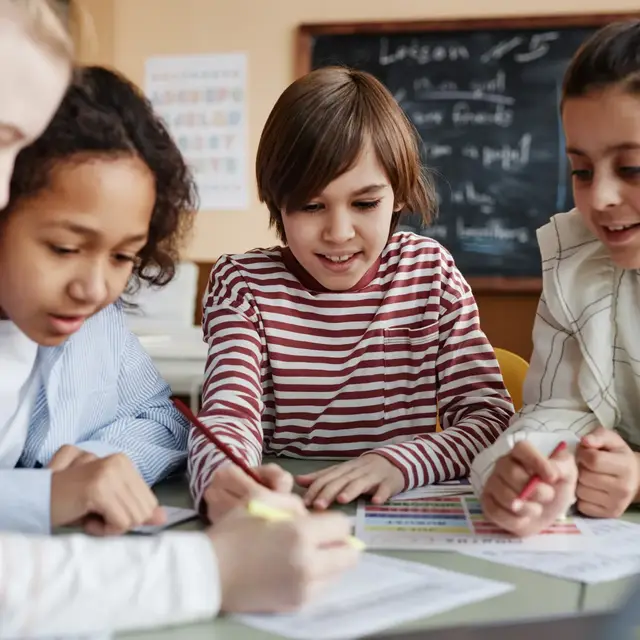
When a child begins to use a new language, he does not just memorize words.

It begins to:

πŸ”· connects ideas understands
πŸ”· context
πŸ”· reacts  in real time

This activates different cognitive processes at the same time β€” attention, memory, logic, emotion.

And this is where one of the biggest advantages comes in.

Better thinking, not just more words

Research shows that children who learn a foreign language develop better problem-solving skills.

Not because they know more, but because they think more flexibly.

As the brain gets used to switching between languages, it becomes more effective in other situations:

🟦 finds solutions faster
🟦,  adapts more easily
,  sees more thanπŸ”· one perspective

It's not just a language skill. It's a way of thinking.

Memory is trained on the fly

Another important effect of language learning is on memory.

But it's not about mechanical memorization.

When a child uses language in a real situation, such as in a conversation, game or story, the information is associated with an experience.

And the brain remembers experiences much better than dry information.

πŸ”· Words are associated with emotion,

πŸ”· context helps to remember,  knowledge becomes usable

Empathy begins with understanding

One of the most underestimated effects of language learning has to do with emotional intelligence.

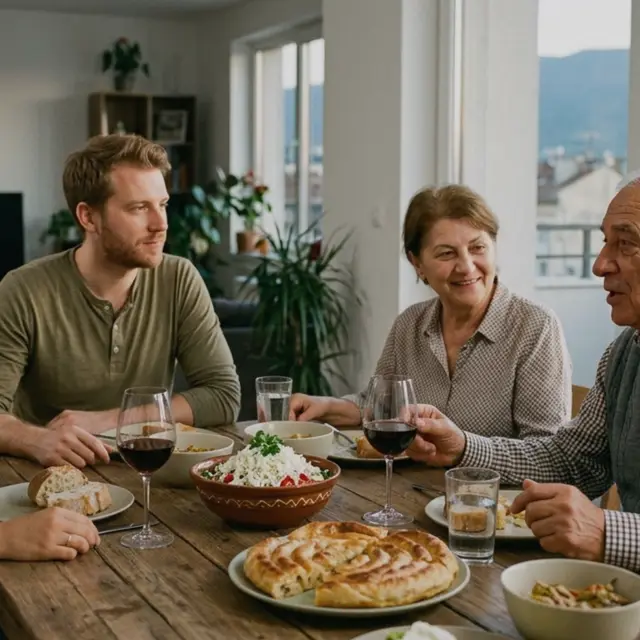
When a child touches another language, he also touches another culture.

To different ways of thinking. To different habits. To different points of view.

This naturally broadens the worldview.

And this is where empathy and the ability to understand each other develop.

🟦 We see the world more broadly
🟦 understand differences
🟦 communicate more easily

Blogpost banner (1800 x 1000 px) (7).png

Learning doesn't have to be a strain

Many of us associate learning with effort, tension, and rules.

But it works differently for children.

When the environment is natural and engaging, learning happens without resistance.

Therefore, the approach is key.

What does this look like in a real environment

When a language is learned through real-world situations, the result is different.

Instead of:

  • Exercises without context
  • Repeating rules
  • fear of mistakes

The child receives:

🟦 conversations, close to real life
🟦 topics related to family and everyday
🟦 environment, in which it is normal to try

This creates confidence right from the start.

Different ages, different approach

Each age has its natural way of learning.

Effective training is therefore adapted:

πŸ”· in preschool through games, songs and movement
πŸ”· between 7 and 12 years old through stories, imagination and teamwork
🟦 between 13 and 16 years old through real-world themes and expression of opinion

Thus, learning remains natural in every phase.

More than language

After all, the child does not just get a new language.

It receives:

🟦 confidence to express
🟦 the  ability to communicate
🟦  ability to adapt

And these are skills that remain for life.


From the first words to the real advantage: how language stays for life

We've seen why children learn a language more naturallyβ€”thanks to their flexible brains, their lack of fear of making mistakes, and their ability to perceive the world through experience.

But there is something even more important.

What starts as a game remains as an advantage.

Blogpost banner (1800 x 1000 px) (8).png

Early onset has a long-term effect

When a child starts learning a language early, they don't just progress faster right now.

It builds a foundation.

Research shows that early language learning supports the development of the so-called. executive functions – the ability to plan, concentrate and manage our attention.

In other words:

🟦 The child learns to think more
🟦 structurally, to move between tasks
🟦 more easily, to maintain focus in a dynamic environment

These are skills that carry far beyond language.

Confidence is built into action

One of the most valuable things a child receives is not perfect pronunciation.

And the confidence to speak.

It doesn't come from knowing everything, it comes from trying.

When the child engages in conversations, even with mistakes:

πŸ”· begins  to feel comfortable
πŸ”· gets used to expressing his
πŸ”· thoughts, understands that communication is more important than perfection

And this changes the way it is perceived.

From the classroom to real life

The biggest difference in learning comes from whether knowledge stays in the classroom β€” or goes outside of it.

When language is related to real situations:

🟦 The child knows how to use it
🟦 reactions become faster
🟦 confidence becomes natural

This is the moment when language ceases to be an "object".

It becomes an instrument.

In a world that's changing

Today's children will grow up in a world that is even more connected, even faster, and even more global.

In such a world, the ability to communicate clearly is key.

Here, too, language gives more than just translation.

It gives:

πŸ”· Access to more opportunities
πŸ”· Confidence in a new environment
πŸ”· Ability to connect with different people


The Language and the Future of Thinking

In the age of technology and artificial intelligence, the value is not just in knowing.

It's about being able to formulate a thought.

To ask questions. To express ideas. To understand nuances.

This is exactly what language develops.

And this is a skill that will become more and more valuable.

The role of the parent

For parents, the choice often seems practical.

Which course? When? How often?

But in fact, the question is deeper.

What kind of environment do we give the child to develop?

An environment in which:

🟦 can try without fear
🟦  mistakes are part of the process
🟦, talking is natural

This is the environment in which confidence is built.

Small steps create a big result

The child does not need to make huge efforts.

It is enough to have:

  • regular contact with the language
  • opportunity to use it
  • supportive environment

Thus, learning becomes part of everyday life.

And that's when the results are strongest.

More than a skill, a way of developing

Language is not just something that a child "will know".

It is a way of thinking, communicating and developing.

It affects:

🟦 confidence,
🟦 communication,
πŸ”· ability to understand others

And these are qualities that remain.

The natural next step

When learning is age-appropriate, when it includes real-life topics, and when it encourages speaking from the start, children don't just learn.

They begin to use language.

That's why approaches like Berlitz work β€” because they put the child in real-world situations where language is a means of communication rather than an end in itself.

πŸ”· First words. Real conversations. Confidence for life.

Sometimes the most important decision is to give your child an environment in which to start talking.


Related Articles

May 7, 2026

May 7, 2026

A sharp mind. A strong spirit. Language as a workout for your brain
April 1, 2026

April 1, 2026

Humor, Language and Communication: Why Laughter Helps Us Speak More Freely | Berlitz BG
March 7, 2026

March 7, 2026

As the Days Grow, So Does Our Potential |Berlitz BG