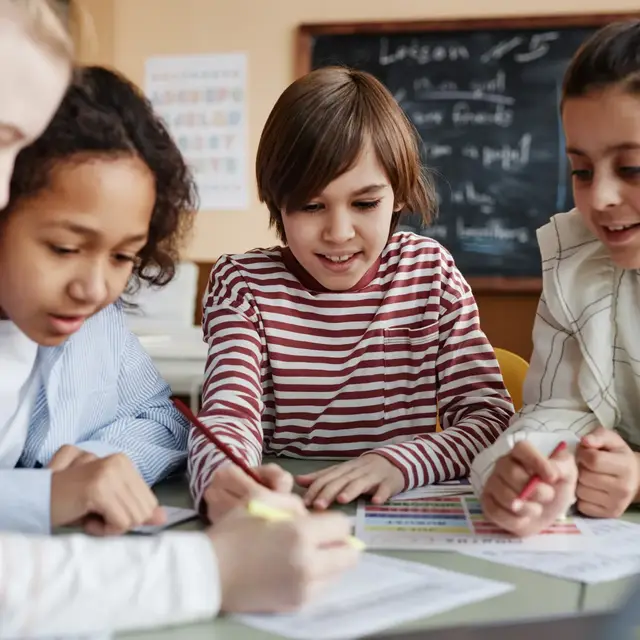
Four Young people laughing Blogpost banner (1800 x 1000 px) (4).png

Humor, Language and Communication: Why Laughter Helps Us Speak More Freely | Berlitz BG

April 1, 2026

Author:

There is a moment in a conversation when someone makes a joke β€” and suddenly everyone relaxes.

The silence breaks. Eyes meet. The tension disappears.In a second, the atmosphere changes.

Laughter does something very simple but very powerful: it tells everyone in the conversation that we are on the same wavelength.

This is exactly why humor is so important in language.It is not just entertainment. It is a social tool.


Why Our Brain Responds So Strongly to Humor

Psychologists have studied the role of humor in communication for decades. Research in social psychology, including work by neuroscientist Robert Provine, shows that laughter is a powerful social signal. When people laugh together, the brain releases chemicals associated with trust and a sense of safety.

This means that humor:

🟦 reduces social tension

🟦 creates a sense of belonging

🟦 makes communication easier

In other words: when we laugh, we begin to speak more naturally.

This is why conversations that contain moments of humor tend to be remembered more vividly.

Humor as a Bridge Between People

If you think about the best conversations in your life, you will often notice one common element: a moment of laughter.

This applies to friendly conversations, business meetings, and learning environments alike. Humor does not diminish the seriousness of a topic. Instead, it creates a space where people feel comfortable participating.

In business environments this is particularly important. Research in leadership psychology shows that appropriate and moderate humor increases trust and helps teams communicate more openly.

Sometimes a short moment of humor can improve the atmosphere of a meeting more than a long presentation.


Why Humor Also Helps Learning

Laughter plays an important role in learning as well.

When we feel relaxed and emotionally engaged, the brain processes information more effectively. Educational psychology shows that learning environments that include humor and emotional engagement improve retention.

The reason is simple β€” the brain remembers emotional experiences more easily.

When a learning environment is overly formal and tense, the brain enters a defensive mode.When the atmosphere is relaxed and natural, learning accelerates.

That is why many modern learning approaches aim to create exactly this type of environment.


Humor as a Key to Culture

Every language has its own form of humor.

British humor is famous for its dryness and subtle irony. French humor often relies on clever wordplay and intellectual irony. German humor sometimes draws on logical twists or unexpected turns of meaning.

And Bulgarian humor?

It is often self-ironic.

We like to laugh at our own difficulties, the strange moments of everyday life, and situations everyone can recognize. It is a way to create connection β€” even between people who have just met.

Through humor we begin to understand not only the words of a language, but also the mindset of the people who speak it.


Language Comes Alive in Real Situations

When we learn a language only through rules and exercises, we often miss this human side of communication.

Real conversations always contain nuance:a smile, a pause, a joke, a reaction.

These are the moments that transform language from a system of words into living communication.

That is why many modern language-learning approaches focus on real-life situations. When conversations feel natural, people begin to speak more confidently.


Why Humor Helps Us Speak More Freely

There is a simple reason for this:humor frees us from the pressure to be perfect.

When a conversation is light and relaxed, we worry less about saying everything exactly right. Sometimes even mistakes become moments of shared laughter.

And this touches one of the biggest barriers in learning a new language β€” the fear of making mistakes.

When the environment feels supportive and relaxed, that barrier gradually disappears


What This Looks Like in a Modern Learning Environment

One of the core principles of contemporary language learning is that learning should resemble real communication.

In courses using the Berlitz Method, conversation is at the center from the very first lesson. Topics and situations are connected to real life, which allows participants to speak naturally.

This means that moments of spontaneous humor often appear β€” the same kind of lightness that exists in real conversations.

And this natural atmosphere helps people build confidence.


Colleagues laughing Blogpost banner (1800 x 1000 px) (5).png


Humor as a Signal of Belonging

Ultimately, humor does something deeply human:it shows that we belong in the conversation.

When you understand a joke in another language, it means you are no longer just observing the conversation. You are part of it.

And that is one of the most rewarding moments in the process of learning a language.


Humor Creates Stronger Connections

One of humor’s strongest social functions is its ability to build relationships. Social psychologists have long observed that people who laugh together develop trust more quickly.

The reason is simple: laughter signals safety.

When we laugh together:

🟦 barriers between people decrease 🟦 conversation becomes more natural πŸ”· trust grows faster

This applies to friendships as well as professional relationships. In workplaces, appropriate humor often makes communication more open and collaboration easier.


Humor in Business Communication

Research in organizational behavior shows that appropriate humor can improve teamwork and communication. It creates a more open environment where people feel comfortable sharing ideas and participating actively.

This does not mean every meeting needs to become a comedy show.

But a little humanity in conversation can make a meaningful difference.

When teams laugh together, communication becomes more flexible and honest.

And when communication flows naturally, better results often follow.


Humor in Learning

Laughter also plays an important role in the learning process.

When people feel relaxed and emotionally engaged, their brain absorbs information more easily. Emotional experiences are stored more deeply in memory.

This is why learning environments that include lightness and humor often produce better outcomes.

When learners feel comfortable:

πŸ”· they ask more questions πŸ”· they participate more actively πŸ”· they speak more confidently

And speaking is exactly what builds confidence in a new language.


The Moment You Understand the Joke

There is a special moment every language learner experiences.

The moment when you understand a joke in that language β€” without translating it.

This signals that you are beginning to think within the cultural framework of that language. You are no longer simply decoding words. You are sensing context, tone, and meaning.

It is often an exciting realization: you are not just learning the language β€” you are participating in it.


Humor as a Cultural Compass

Humor reveals aspects of culture that textbooks rarely explain.

Through jokes and playful expressions we learn what people value, how they see themselves, and how they interpret everyday situations.

For example:

🟦 British humor often relies on irony and understatement 

🟦 French humor frequently plays with language and wit

🟦 Bulgarian humor often includes self-irony and observations about everyday life

When you start recognizing these nuances, language becomes more than communication. It becomes a window into culture.


Two Travellers laughig Blogpost banner (1800 x 1000 px) (4).png


Real Conversations Create Real Understanding

This is where an important difference appears between theoretical and practical language learning.

When language is learned only through rules, conversation remains secondary.When language is learned through real situations, communication becomes natural.

The Berlitz Method is built around this principle. Learners use the language in contexts close to real life β€” through dialogue, situations, and interaction.

In this type of environment, the natural elements of communication appear: smiles, spontaneous reactions, and sometimes small jokes.

This is not just pleasant.It helps learning become more effective.


A Space for Conversation

Many people hesitate to speak in a foreign language because they are afraid of making mistakes.

But when the environment feels supportive and relaxed, that fear slowly fades. Conversation becomes easier, and mistakes become part of the learning process.

That is when real learning begins.

🟦 we speak more 🟦 we listen more carefully 🟦 we react more naturally

Confidence grows step by step.

Laughter as a Sign of Progress

When laughter appears in conversation, it often means participants feel comfortable enough to be themselves.

In a learning environment, that is a very positive signal.

It means the barriers are beginning to disappear. Language is no longer just a task β€” it becomes a tool for real connection.


When Language Becomes Part of Life

Ultimately, the goal of learning a language is not to memorize as many rules as possible.

The goal is to participate in conversations. To understand people. To laugh with them.

When that moment arrives, language is no longer a subject. It becomes an experience.


Laughter as the Beginning of Conversation

Sometimes a small joke can achieve something that dozens of grammar rules cannot: it opens the conversation.

It reminds us that language is alive. That communication is human. That confidence begins with participation.

And often, that light moment of laughter is the very first step toward speaking more freely.

πŸ”· Find the words. Open your world.


Related Articles

March 7, 2026

March 7, 2026

As the Days Grow, So Does Our Potential |Berlitz BG
February 7, 2026

February 7, 2026

Stay quiet, so you don’t embarrass yourself | Berlitz BG
January 18, 2026

January 18, 2026

We break the biggest myth: "It's too late to start."