Quebec French Expressions: A Beginner's Guide to Everyday Québécois
Author:
Berlitz
Bonjour gets you started. Québécois expressions get you into the conversation.
You've learned to say bonjour, but then a Quebecer answers "pas pire" or calls the weather "frette," and you're lost. If you're learning French in Canada, a few everyday Québécois expressions will help you follow real conversations much sooner.
This beginner's guide explains what these expressions mean, how casual they are and when you can use them yourself.
Published November 16, 2026 · By Berlitz Canada · 6 min read
Table of Contents
- Hello in Québécois: The Quick Version
- Everyday Reactions You'll Hear Constantly
- Talking About Feelings
- Words for a Quebec Winter
- People and Daily Life
- Expressions That Trip Up Learners
- How to Use Québécois Without Sounding Forced
- Frequently Asked Questions
Hello in Québécois: The Quick Version
Before the expressions, the basics. Quebecers say Bonjour to anyone at any time of day, Allô or Salut with friends, and À tantôt for "see you later." For a complete list of greetings, see our guide to essential French phrases for newcomers.
One surprise: in Quebec, Bonjour can also mean goodbye. According to the Office québécois de la langue française (OQLF), it's common during the day when leaving someone. In formal settings, such as ending a business call, "au revoir" is preferred.

Everyday Reactions You'll Hear Constantly
These short expressions pop up in almost every conversation. Most are casual, so use them with friends and colleagues rather than in a job interview.
| Expression | Meaning | Example |
|---|---|---|
| Pas pire | Pretty good | "Comment ça va? — Pas pire!" |
| C'est correct | It's OK / That's fine | "Désolé du retard. — C'est correct." |
| Ben là! | Come on! / Seriously? | "Ben là, il est déjà parti?" |
| Ayoye! | Ouch! / Wow! | "Ayoye, je me suis cogné le pied!" |
| Pantoute | Not at all | "Ça me dérange pas pantoute." |
| C'est plate | It's boring / That's too bad | "Le film était plate." |
| C'est le fun | It's fun / That's nice | "La soirée était vraiment le fun." |
Notice "pas pire": it sounds negative, but it usually means things are going well. In Québécois, tone often matters more than the literal words.
Talking About Feelings
Quebecers have colourful ways to say how they feel. You'll hear these at work, at home and on the bus.
- Être tanné: to be fed up. "Je suis tanné de l'hiver."
- Avoir de la misère: to have a hard time. "J'ai de la misère avec les verbes."
- Être brûlé: to be exhausted. "Après cette semaine, je suis brûlé."
- Capoter: to freak out, or to be crazy about something. "Elle capote sur ce restaurant."
- Lâche pas!: hang in there, don't give up.
"Lâche pas!" is worth remembering. Learners often hear it from teachers and friends when French gets tough, and it's always meant kindly.
Words for a Quebec Winter
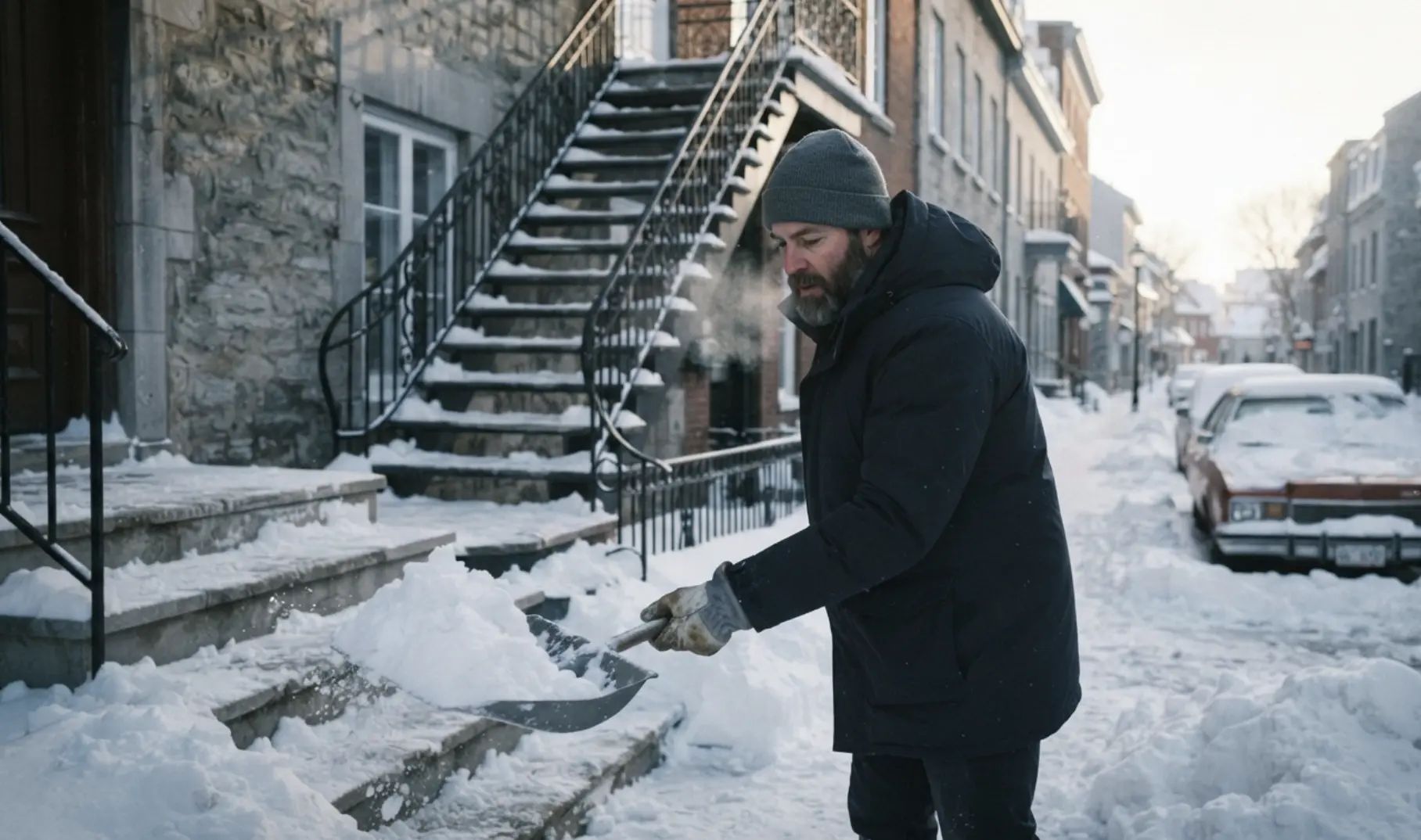
Winter shapes everyday vocabulary, and you'll need these words from November to April.
- Il fait frette: it's freezing, stronger than "il fait froid."
- Un banc de neige: a snowbank.
- La sloche: slush, the wet grey snow on sidewalks.
- Une tuque: a winter hat.
- Une tempête: a snowstorm.
Weather is also the easiest small talk topic. "Il fait frette à matin!" ("It's freezing this morning!") is a safe way to start a conversation with a neighbour.
People and Daily Life
These words come up when Quebecers talk about the people in their lives and their daily routine.
| Québécois | Meaning |
|---|---|
| mon chum | my boyfriend, or a male friend |
| ma blonde | my girlfriend |
| jaser | to chat |
| magasiner | to go shopping |
| le dépanneur | the convenience store |
Magasiner isn't slang: it's standard Quebec French. The OQLF considers it well established in Quebec and recommends it over "faire du shopping."
Expressions That Trip Up Learners
Some words mean something different in Quebec than in many textbooks. Meals are the classic example: le déjeuner is breakfast, le dîner is lunch and le souper is dinner.
You'll also hear Bienvenue in reply to Merci, borrowed from the English "you're welcome." It's common in Quebec, but the OQLF advises against it and recommends "de rien" or "je vous en prie." As a learner, understand it, but stick with "de rien."
Finally, ma blonde has nothing to do with hair colour. It simply means "my girlfriend."
How to Use Québécois Without Sounding Forced
Listen first. Notice who uses each expression and in what situation before you try it yourself. Many are casual, so they sound natural with friends but out of place in a meeting.
Start with the easy wins: "pas pire," "c'est correct" and "lâche pas!" are friendly and hard to misuse. Keep more standard French for work emails and formal conversations.
If you're just starting, beginner French classes give you a solid base. An instructor can also tell you which expressions fit which situation, so you go from understanding Québécois to speaking it with confidence.
Frequently Asked Questions
How do you say hello in Québécois?
The safest greeting is Bonjour, used with anyone at any time of day. With friends, Quebecers often say Allô or Salut. In Quebec, Bonjour can also mean goodbye when you leave someone during the day.
What does "pas pire" mean in Quebec?
Literally, "pas pire" means "not worse," but in Quebec it usually means "pretty good." If you ask "Comment ça va?" and someone answers "Pas pire," they're doing well.
Is it OK to use Québécois expressions as a learner?
Yes, as long as you match the setting. Most expressions are casual, so use them with friends and colleagues, and keep more standard French for formal situations.
Is Quebec French hard to understand?
It can feel fast at first, especially with casual expressions and local vocabulary. Regular listening and conversation practice make a big difference, and most learners adjust with time.
Ready to understand Quebecers and answer back? Explore intensive French classes and build real conversation skills faster.