"Y'a Frette!" Your Survival Guide to Essential French Phrases for Winter in Montréal
Author:
Berlitz
"Y'a frette!"
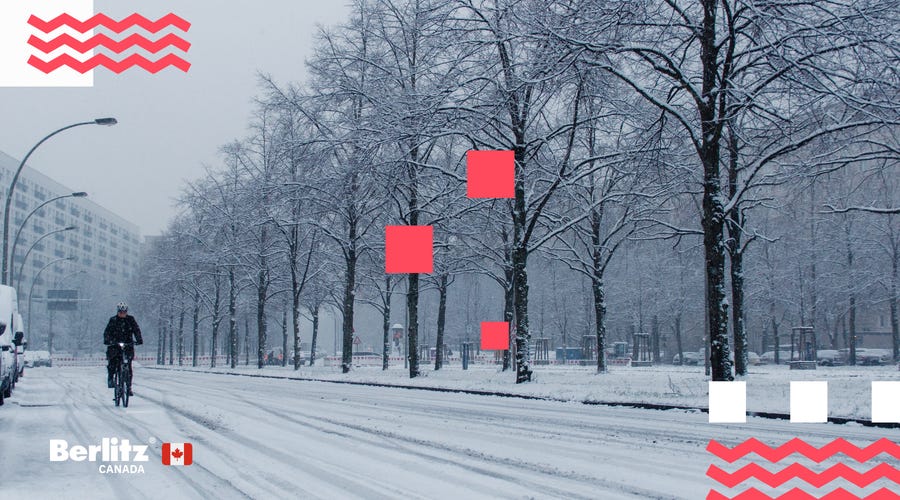
If you've spent even one January day in Montréal, you've heard this phrase—probably shouted by someone rushing past you on the sidewalk, their breath visible in the frigid air.
Here's the thing about Montréal winters: the biggest barrier isn't just the temperature (though the average January low of -14.9°C can feel brutal). It's being able to communicate about it. Whether you're asking a colleague if the metro is running during a snowstorm, complaining about the slush with your neighbor, or simply commiserating with locals over morning coffee, you need the right French phrases.
And not just any French—you need Québécois winter French.
Montréal winters are serious business. According to Environment Canada data (1991-2020 averages), the city sees temperatures averaging -9.2°C in January, with wind chill often pushing it to -25°C or colder. That's not "bring a light jacket" cold—that's "know how to talk about frostbite" cold.
At Berlitz Montréal, we don't just teach you textbook French. We teach you the language that actually gets used on the streets of Montréal—especially when those streets are buried under a bordée de neige.
Ready to survive (and thrive in) your first Montréal winter? Let's get you linguistically prepared.
Table of Contents
- Surviving the Cold—Essential Clothing & Temperature Vocabulary
- Navigating Snow & Ice—Local Communication Essentials
- Sound Like a Local—Québécois Winter Expressions & Humor
- Your Winter Survival Action Plan
- Don't Just Survive Winter—Thrive in It
Category 1: Surviving the Cold—Essential Clothing & Temperature Vocabulary
Before you step outside, you need to know what you're dealing with—and what to wear.
The Core Temperature Phrases
"Il fait frette."
Translation: It's freezing cold / It's bitterly cold
Usage: This is THE phrase you'll hear constantly. "Frette" (or "froid" in standard French) is Québécois for seriously cold. Use it liberally.
"Y'a frette!"
Translation: It's cold! (contraction of "Il y a froid")
Usage: More casual and distinctly Québécois. This is what you yell when you step outside and immediately regret your life choices.
"Ça caille!"
Translation: It's freezing!
Usage: Informal expression used when the cold is particularly biting.
"Quelle est la température?"
Translation: What's the temperature?
Usage: Essential for checking weather reports or asking locals.
"Avec le facteur vent, on est à moins 25."
Translation: With wind chill, we're at minus 25.
Usage: "Facteur vent" (wind chill) is critical vocabulary—it explains why -15°C feels like -30°C.
The Essential Winter Wardrobe
"Une tuque"
Translation: A winter hat/beanie
Why it matters: This isn't optional in Montréal. A tuque is as essential as your keys. You'll hear "Mets ta tuque!" (Put your hat on!) from concerned Montréalais regularly.
"Des mitaines"
Translation: Mittens
Note: While "gants" (gloves) exist, mitaines are warmer and therefore preferred by locals. Choose wisely.
"Un manteau d'hiver"
Translation: A winter coat
Pro tip: Not just any coat. A proper manteau d'hiver is insulated, waterproof, and rated for Canadian winters.
"Des bottes d'hiver"
Translation: Winter boots
Critical detail: Rated for -30°C minimum. Regular boots won't cut it.
"Enfiler des pelures"
Translation: To layer up (literally "put on peels")
Cultural note: This expression emphasizes the onion-layering principle—essential for survival. You'll hear grandmothers everywhere insisting "Enfile tes pelures!"
Colorful Québécois Cold Expressions
"Être gelé comme une crotte"
Translation: To be frozen solid (literally "frozen like a turd")
Usage: Colorful? Yes. Effective? Absolutely. This is what you say when you're so cold you've lost all feeling in your extremities.
"J'ai les doigts gelés."
Translation: My fingers are frozen.
When to use: After forgetting your mitaines. Again.
Want to practice these phrases in real conversations with native speakers? Our in-person classes at Berlitz Montréal (1470 Peel Street, Suite 316) provide the perfect environment for mastering everyday French—including all the winter vocabulary you'll actually use.
Category 2: Navigating Snow & Ice—Local Communication Essentials
Once you're dressed, you need to navigate Montréal's winter infrastructure. Here's the vocabulary that keeps you safe and informed.
Snow & Weather Conditions
"Une bordée de neige"
Translation: A snowstorm / Heavy snowfall
Reality check: Montréal gets multiple bordées each winter. When the weather forecast mentions one, plan accordingly—or stay home.
"De la slush"
Translation: Slush (yes, it's the same word!)
What it is: That wet, heavy, disgusting mixture of snow, ice, salt, and city grime that soaks through your boots. Everyone hates it. Complaining about slush is a local bonding activity.
"De la poudrerie"
Translation: Blowing snow / Snow blizzard
Usage: When wind picks up freshly fallen snow and creates white-out conditions. "Y'a d'la poudrerie" means visibility is terrible.
"Du verglas"
Translation: Ice / Black ice
Safety note: This is dangerous. Verglas forms when rain freezes on contact with cold surfaces. Walk carefully.
"Ça glisse!"
Translation: It's slippery!
Essential warning: You'll hear this shouted on icy sidewalks. You'll also shout it yourself after nearly falling.
Snow Removal & Transportation
"Le déneigement"
Translation: Snow removal
Why it matters: Montréal's déneigement operations are legendary. You MUST move your car when déneigement signs go up, or face towing and fines.
"La souffleuse"
Translation: Snow blower
Sound: You'll hear these massive machines clearing streets at 2 AM. Welcome to Montréal winters.
"La charrue"
Translation: Snow plow
Reality: These work 24/7 during snowstorms. Respect the charrue.
"Le trottoir est glacé."
Translation: The sidewalk is icy.
Usage: Important warning for pedestrians.
"Le métro est-il ouvert?"
Translation: Is the metro open?
When to ask: During major snowstorms when you're wondering if you can get to work.
Winter Health Vocabulary
"J'ai pogné un rhume."
Translation: I caught a cold.
Note: "Pogner" (to catch) is distinctly Québécois. Standard French uses "attraper," but you'll sound more local with "pogner."
"J'ai la grippe."
Translation: I have the flu.
Winter reality: Everyone gets sick in winter. Know how to explain it.
"Je suis grippé(e)."
Translation: I have flu symptoms / I'm coming down with something.
Usage: When you're not sure if it's a cold or the flu yet.
Pro Tip: Reading Local Weather Reports
Montréal weather forecasts use specific terminology:
"Avertissement de tempête" = Storm warning (stay home)
"Risque de poudrerie" = Risk of blowing snow (low visibility)
"Accumulation prévue" = Expected accumulation (how much snow is coming)
"Refroidissement éolien" = Wind chill (the real temperature you'll feel)
Understanding these terms isn't just convenient—it's a safety issue. Check Radio-Canada or Météo Média daily during winter months.
Need structured learning to handle these complex terms confidently? Our French classes at Berlitz use immersive methods to ensure you're ready for real-world situations—including winter emergencies.

Category 3: Sound Like a Local—Québécois Winter Expressions & Humor
Now for the fun part: the colorful expressions that make Québécois French so distinctive. Master these and locals will know you're not just visiting—you're one of them.
Classic Québécois Winter Sayings
"Attache ta tuque (avec de la broche)!"
Literal translation: Tie your hat (with wire)!
Actual meaning: Brace yourself! / Get ready for something difficult or intense!
Origin: Historically, Montréalais needed to secure their hats in brutal winter winds. Now it's used metaphorically for any challenging situation.
Example: "Le projet de fin d'année? Attache ta tuque!"
"On ne voit ni ciel ni terre."
Translation: We can't see the sky or the earth.
When to use: During heavy poudrerie when visibility drops to near zero. This phrase perfectly captures that disorienting white-out feeling.
"L'hiver, ça forge le caractère."
Translation: Winter builds character.
Cultural note: What Montréalais tell themselves (and newcomers) to justify enduring -30°C temperatures. Solidarity through suffering.
"C'est plate en hiver."
Translation: It's boring/annoying in winter.
Usage: When you're tired of being cold, tired of shoveling, and tired of short days. Everyone says this at least once per winter.
"Fait frette en titi!"
Translation: It's extremely cold! ("En titi" is an intensifier)
Casual usage: Very informal. Use with friends, not in professional settings.
Practical Winter Complaints (Social Integration Gold)
Montréalais bond over winter complaints. Use these to instantly connect:
"J'en ai marre de pelleter."
Translation: I'm sick of shoveling.
Universal truth: Everyone feels this. Commiserate freely.
"Mes pieds sont mouillés à cause de la slush."
Translation: My feet are wet because of the slush.
Shared experience: This will resonate with every single person.
"Vivement le printemps!"
Translation: I can't wait for spring!
When to say: Anytime after mid-February. The answer will always be: "Moi aussi!"
"On gèle!"
Translation: We're freezing!
Short and sweet: Perfect for when you're waiting for the bus in -20°C.
The Montréal Winter Attitude
Here's what you need to understand about Montréal winters: locals don't just endure them—they embrace them. There's pride in surviving. Master these phrases, and you're not just learning French—you're joining a culture that finds humor and community in the cold.
Want to practice these conversational phrases with expert guidance? Our private lessons can be customized to focus specifically on everyday Québécois expressions, ensuring you sound natural in social situations. Or join a group class and practice winter vocabulary with fellow learners who share your survival goals.
Your Winter Survival Action Plan
You now have the essential French vocabulary to navigate Montréal winters. Here's how to put it into practice:
Week 1: Master the Basics
Memorize core temperature phrases ("Il fait frette," "Y'a frette")
Learn essential clothing vocabulary (tuque, mitaines, pelures)
Practice asking "Quelle est la température?"
Week 2: Navigate Conditions
Study snow and ice terminology (bordée, slush, verglas)
Learn déneigement vocabulary
Check daily weather forecasts in French
Week 3: Sound Like a Local
Practice Québécois expressions with native speakers
Use "pogner" instead of "attraper"
Try "Attache ta tuque!" in conversation
Week 4: Full Immersion
Complain about winter in French (it's tradition!)
Discuss weather with neighbors, colleagues, baristas
Read Météo Média forecasts without translating
Don't Just Survive Winter—Thrive in It
Montréal winters are tough, but they're also a massive opportunity to practice your French and connect with the community. These phrases are your linguistic snowshoes—they'll keep you moving forward even in the deepest snow.
The difference between a miserable winter and an embraceable one often comes down to communication. When you can joke about the cold with your colleague, warn a stranger about verglas, or understand the déneigement schedule, winter becomes manageable. Even enjoyable.
Ready to master winter French?
Whether you need survival vocabulary fast or you're aiming for full Québécois fluency, Berlitz Montréal has the flexible learning plan for you:
In-person classes: Immersive experience at our downtown location (1470 Peel Street, Suite 316)
Online classes: Learn from anywhere with live instructor interaction
Private lessons: Customized to your specific needs—including winter survival French
Group classes: Practice with fellow learners in a supportive environment
Our proven Berlitz Method® focuses on conversational skills from day one—so you'll be ready to use these phrases in real situations, not just memorize them.
Winter is coming. Are you ready?
Learn French with Berlitz Montréal and transform from winter survivor to winter warrior.
Enfile tes pelures et attache ta tuque—c'est parti! ❄️
Looking for more Montréal-specific French? Check out our guides on holiday vocabulary and setting language learning goals for 2026.